Hi, my name is Tom Smykowski, I'm a staff full-stack engineer. I build and scale SaaS platforms to millions of users, working end-to-end from system architecture to frontend to mobile. On this blog I write about frontend frameworks, AI-assisted development, and the engineering decisions behind shipping live products.
Ryan Atkinson measured how many LLM tokens different JavaScript frameworks need to express the same UI patterns, using the same corpus of examples for every framework. That kind of apples-to-apples comparison is rare, and it tells you something about how compact each framework's surface syntax is when you write the same feature.
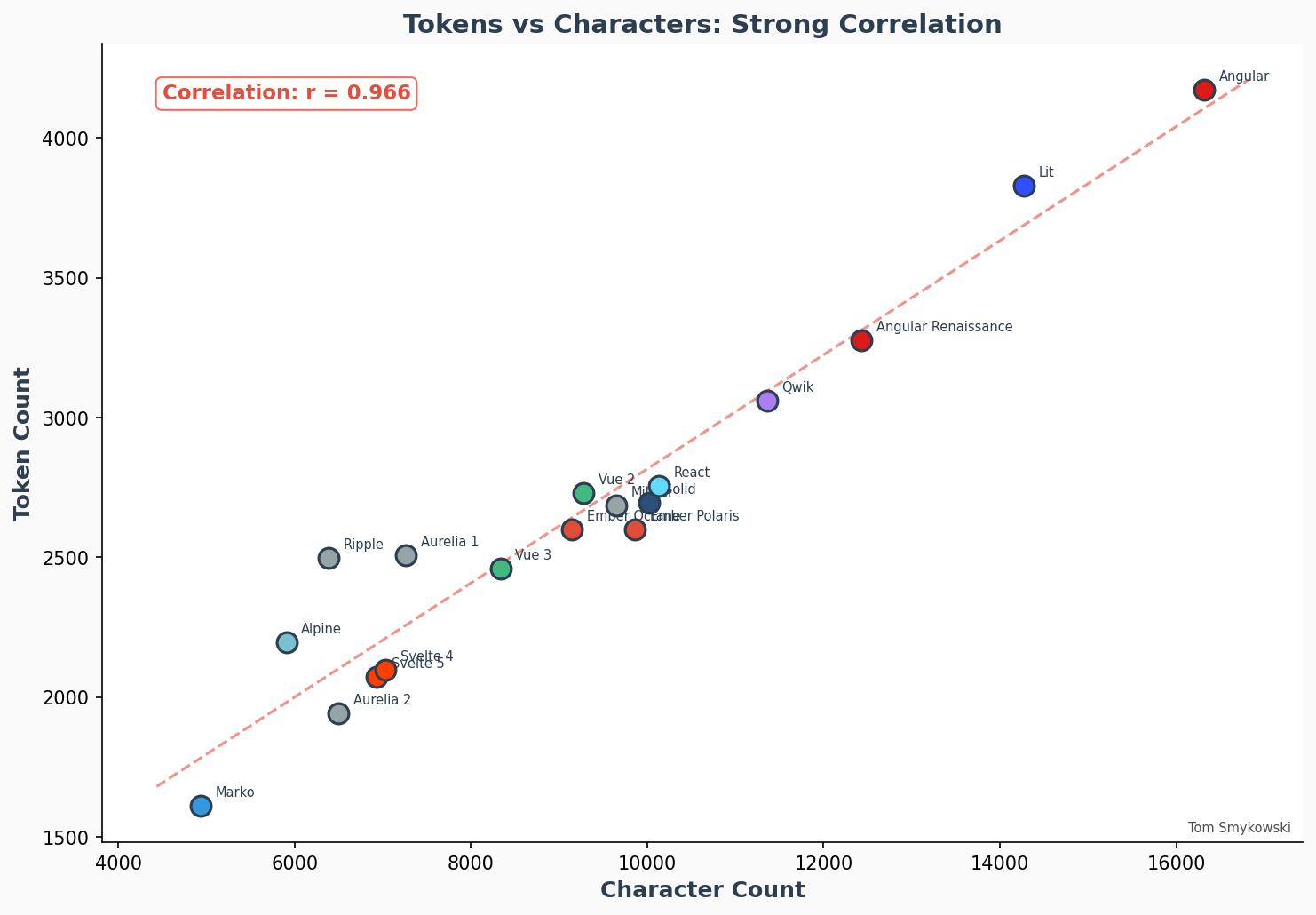
Tokenization turns source text into the units models actually consume. Shorter-looking code does not always mean fewer tokens, and fewer tokens in one snippet does not automatically translate into cheaper or faster work when humans and agents iterate until the code is correct.
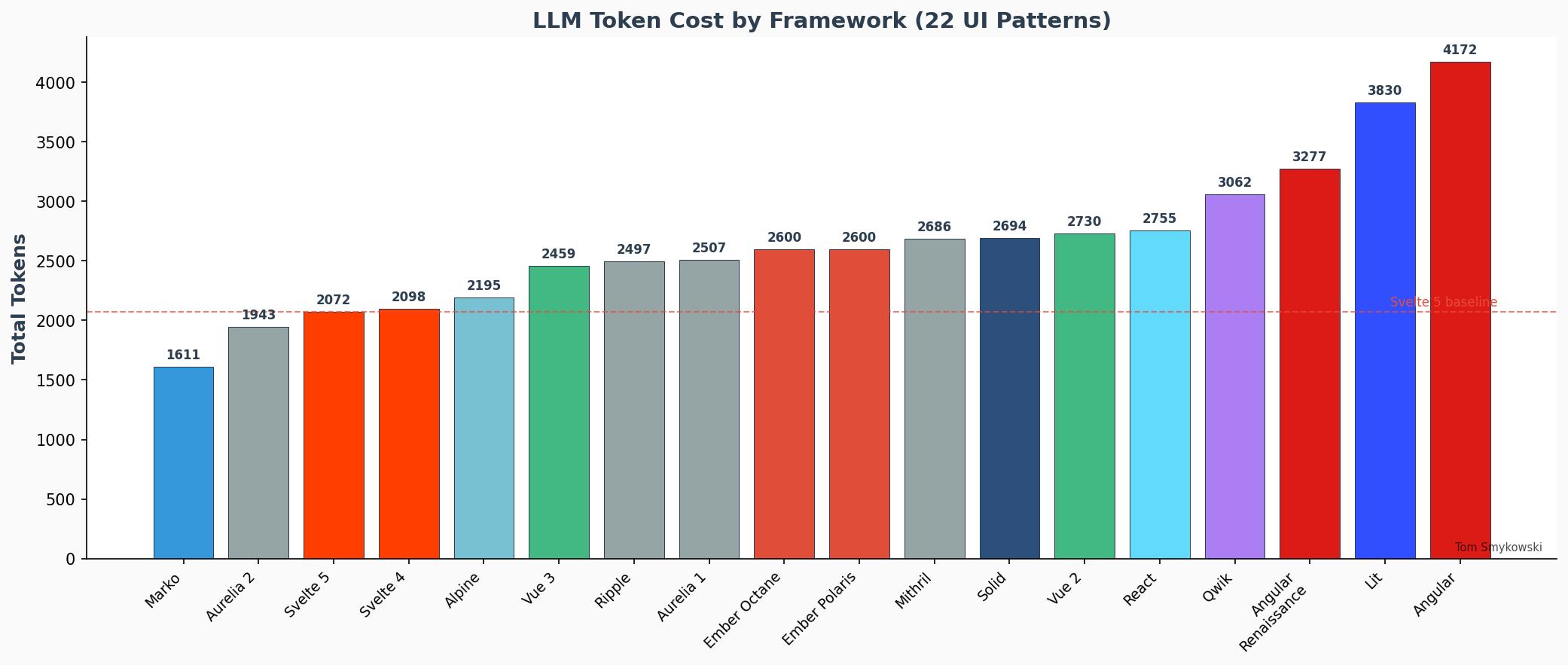
The full piece walks from raw counts through snippet comparisons toward how teams should think about delivery cost (retries, review, debugging) next to representation cost (tokens in the editor).
Staff and principal engineers, tech leads, founders, and senior developers who rely on AI coding tools are the core audience. If you own framework choices or agent workflows for a shipped product, this is meant for you.
What this article is about
It connects a public token-count benchmark to how engineering teams should interpret “efficiency” when AI is in the loop. You get narrative context, chart-backed visuals, and a practical lens for judging frameworks without treating one leaderboard number as the whole story.
Questions this article answers
- What does a cross-framework token comparison actually measure?
- Where can compact syntax help or hurt when agents generate and refactor code?
- What should you weigh beyond per-snippet token counts when you care about shipping quality?
- How do explicit versus implicit framework patterns show up in real snippets?
Article size and reading time
- Length: long-form (~3.4k words, seven figures, multiple code comparisons)
- Estimated reading time: about 16–20 minutes
- Includes diagrams, parity-style snippet examples, and a structured takeaway section for decision-making